Garage Door Repair · Sussex, WI

Garage door repair that starts with the right diagnosis

A door that groans, sticks, reverses or won’t move at all is telling you something. We find out exactly what — then fix the cause, not just the symptom.

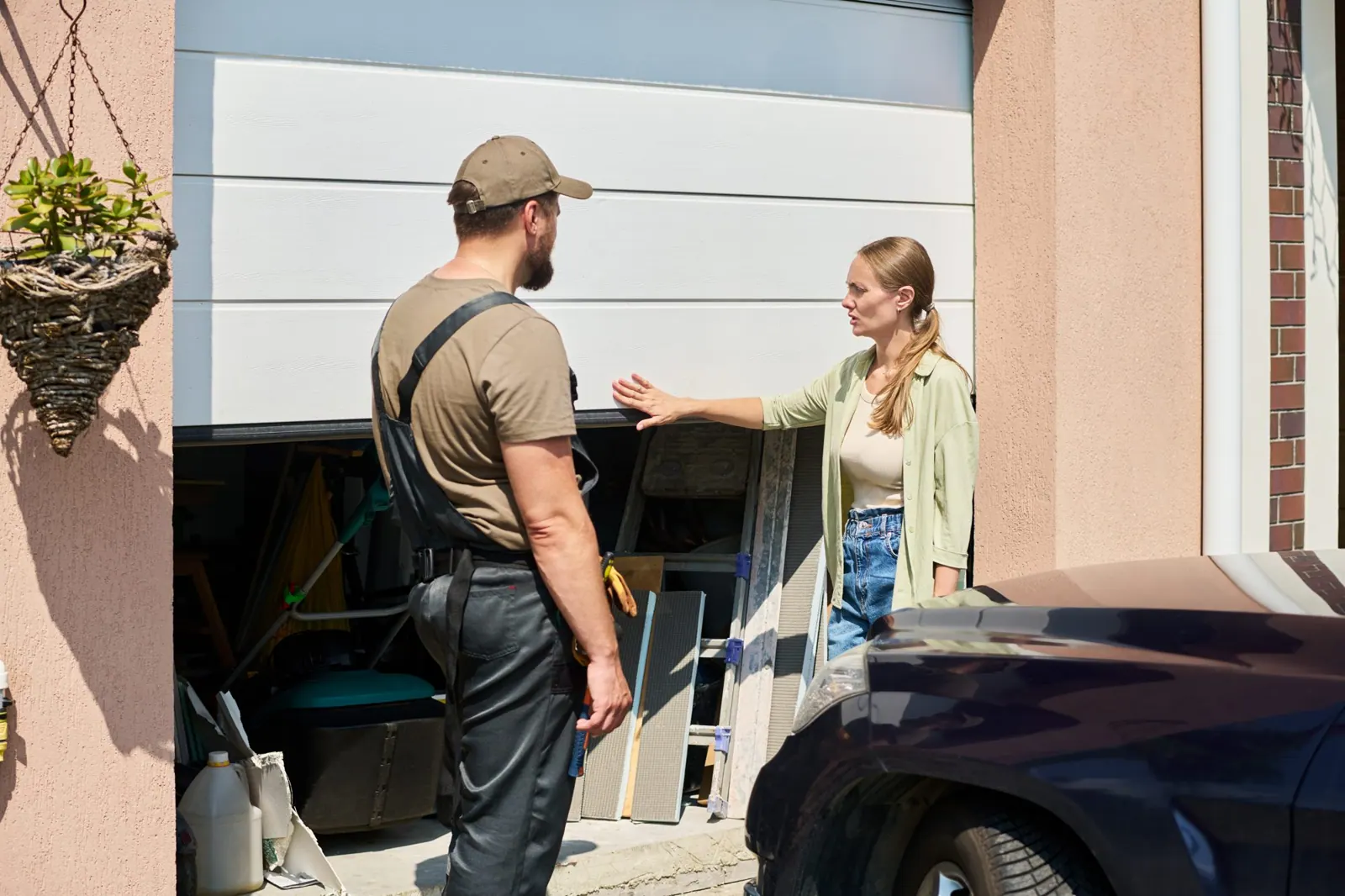
Garage door technician discussing a repair with a homeowner at an open garage doorResidential Doors

Why a garage door stops working properly

A residential garage door is one of the largest moving objects in a home. A typical two-car steel door weighs somewhere in the range of 130 to 250 pounds, and an insulated or wood door can weigh considerably more. It moves that weight up and down several times a day, all year, through Wisconsin summers and sub-zero January mornings. It is not surprising that parts wear out. What surprises most homeowners is how interconnected those parts are.

The springs counterbalance the door so it feels light. The cables transfer that spring force to the bottom corners. The rollers guide the door through the tracks, the hinges let each section fold around the curve, and the opener simply pushes and pulls a door that should already be balanced. When one part weakens, the others pick up the slack — and they start wearing faster too. That chain reaction is why a squeaky roller ignored for a year can end up as a burned-out opener motor.

Good garage door repair, then, is less about swapping a part and more about understanding why it failed. A cable that frayed because a drum slipped will fray again if the drum is not addressed. An opener that keeps reversing because the door is out of balance will keep reversing no matter how many times the sensitivity is turned up.

How we diagnose a garage door problem

Every repair starts with the door disconnected from the opener and lifted by hand. That single test tells us a lot. A properly balanced door should lift smoothly with modest effort and stay roughly in place when released at waist height. If it drops, the springs are weak or broken. If it shoots up, they are over-tensioned. If it binds at one point in its travel, we look at the tracks, rollers and hinges at that spot.

From there we work through the system methodically:

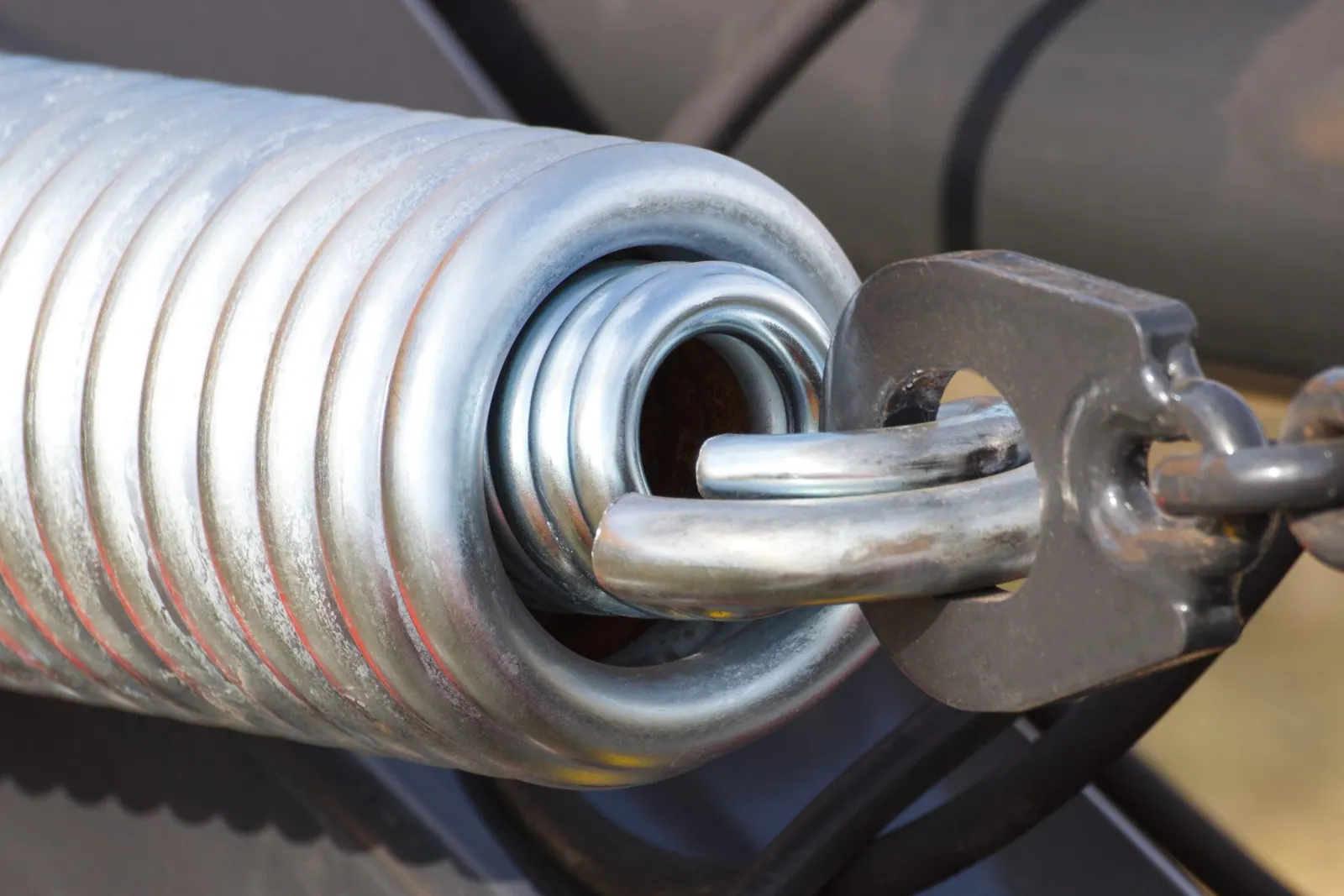
  • Springs — checking for gaps in the coils, rust, stretching and whether the spring size actually suits the door.
  • Cables and drums — looking for fraying, kinks and uneven winding, and confirming both sides are carrying equal tension.
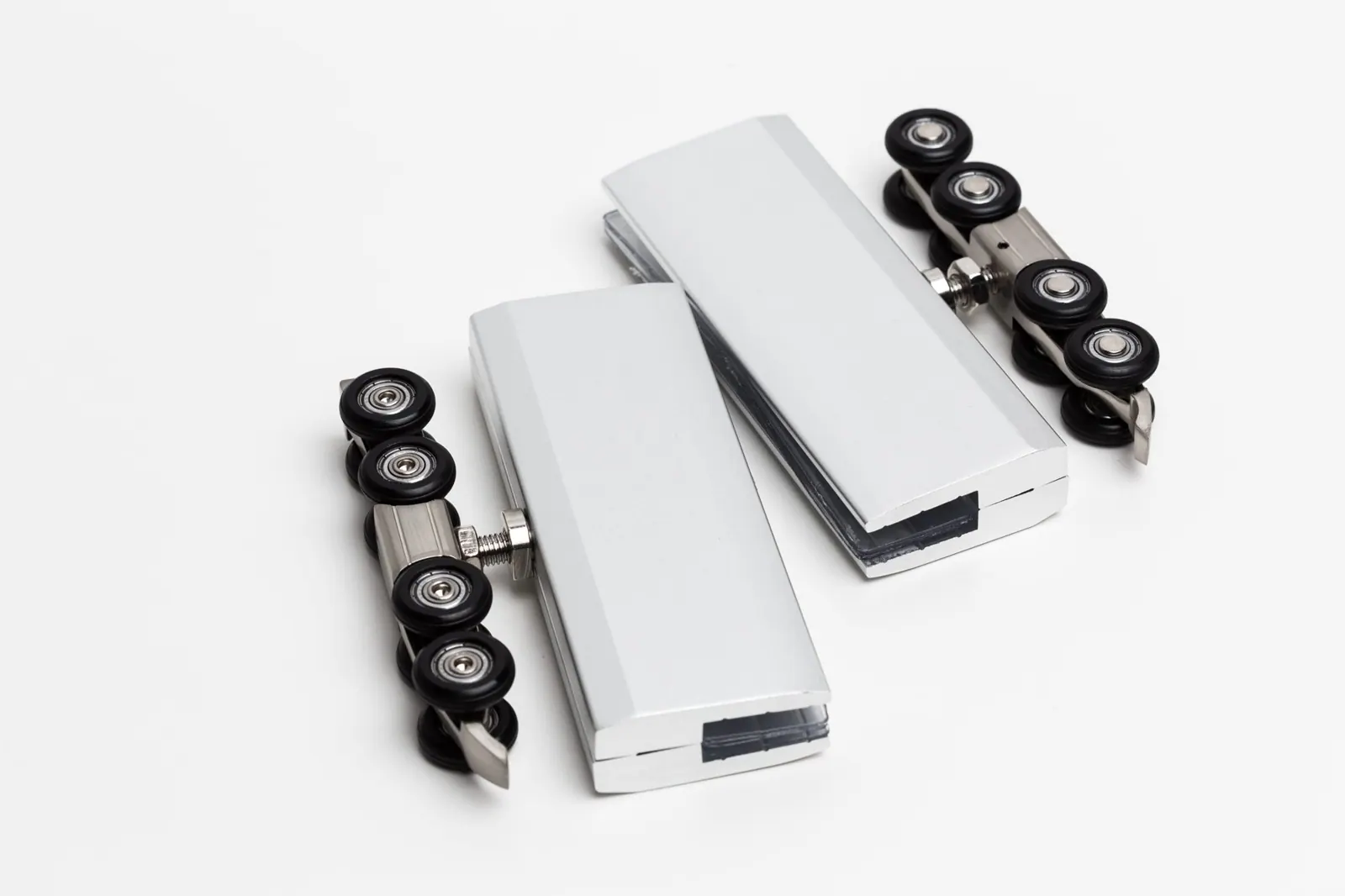
  • Rollers and hinges — spinning rollers by hand, checking for wobble, cracked hinges or stripped fastener holes.
  • Tracks — measuring alignment and spacing, looking for dents, loose brackets and twisted sections.
  • Opener and safety system — watching how the opener drives the door, checking the force and travel settings, and testing the photo-eye sensors and auto-reverse.
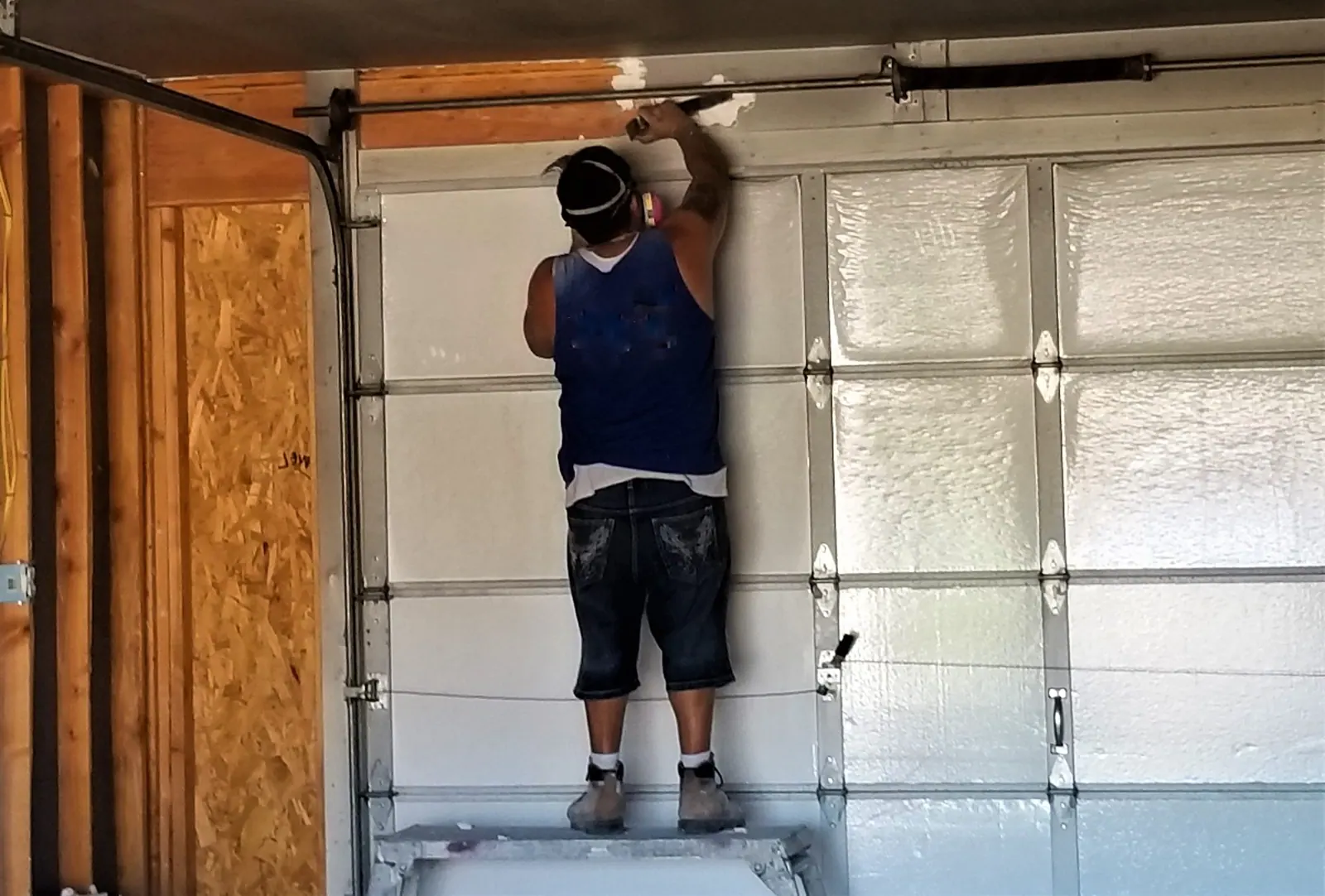
Technician working on garage door hardware inside a residential garage Methodical inspection of the moving hardware is the fastest route to a repair that lasts.
i. What to watch for

Signs your garage door needs repair

Most garage door failures give warning first. Catching these early usually means a smaller, simpler repair.

01

The door feels heavy or slams

When the door drops quickly after you lift it halfway, or the opener strains, the springs are no longer carrying their share of the weight.

02

Grinding, popping or squealing

New or louder noises often point to dry or worn rollers, loose hardware, a failing bearing or a spring that is starting to fatigue.

03

It reverses before closing

Misaligned safety sensors, an obstruction in the track or an incorrect force setting can all cause the door to bounce back up.

04

One side sits lower than the other

A crooked door can signal a slipped or frayed lift cable, a bent track or a drum that has come loose on the shaft.

05

Gaps along the bottom edge

Daylight under a closed door means a worn bottom seal, a sagging section or a door that is no longer travelling square in the tracks.

06

The opener hums but nothing moves

That usually means a broken spring, a disconnected trolley or a stripped gear inside the opener — each needs a different fix.

Before & after

See the difference the right work makes

Drag the handle — or use your arrow keys — to compare.

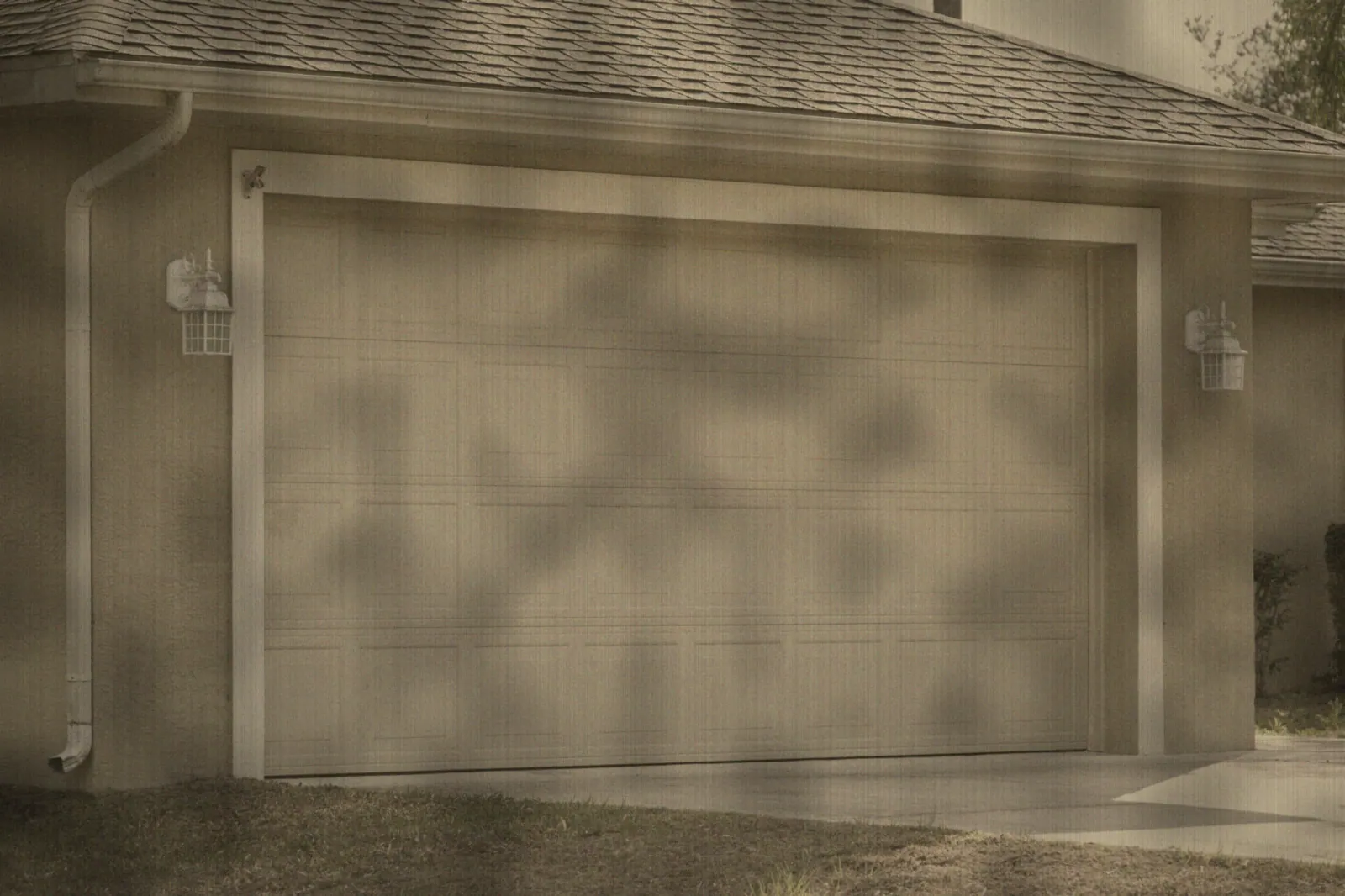
Weathered, grimy tan sectional garage door with faded finish (simulated condition)
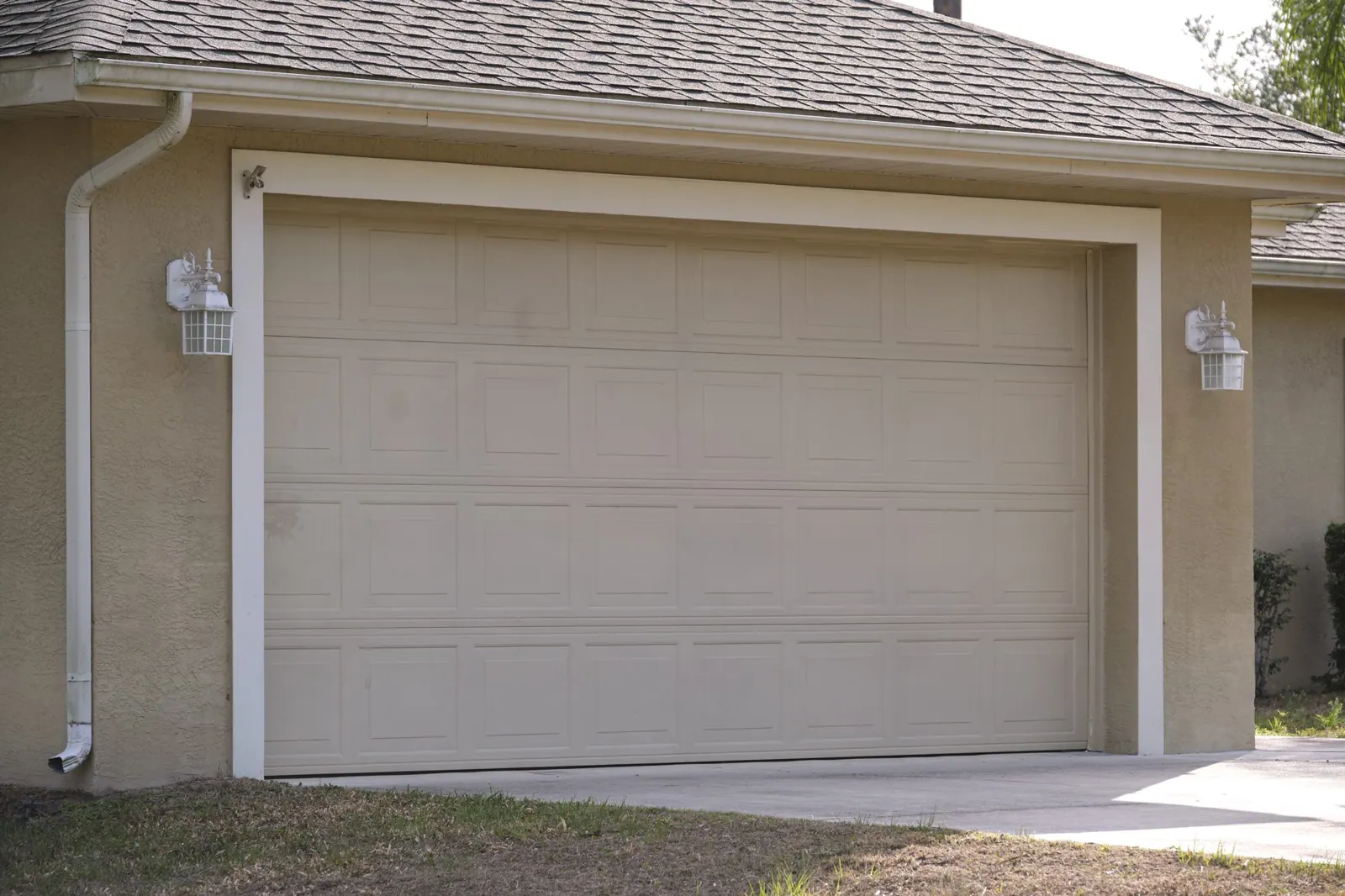
Clean tan raised-panel garage door closing evenly in its frame
BeforeAfter
IllustrativeA neglected door that binds and sits unevenly versus the same door after hardware repair, adjustment and cleaning. Illustrative concept: the “before” view is a digitally simulated condition of the same stock photo, not a customer project.

Common garage door repairs

Spring replacement

Broken torsion or extension springs are among the most frequent reasons a door suddenly won’t open. Springs are rated for a certain number of cycles, and once they reach the end of that life they break — often with a loud bang. Replacement springs need to be matched to the door’s weight, height and drum size, which is why we measure rather than guess. See our dedicated garage door spring repair page for more detail.

Cable and drum repair

Lift cables run from the bottom brackets to the drums on the spring shaft. When a cable frays, slips off its drum or snaps, the door can hang crooked or jam in the tracks. Cables should generally be replaced in pairs so both sides wear evenly. More on this on our cable repair page.

Roller, hinge and track repair

Worn rollers make noise and drag; cracked hinges let sections flex; bent tracks cause binding and can let the door come out of its tracks entirely. Replacing worn rollers with quality sealed-bearing rollers is one of the most noticeable improvements you can make to how a door sounds and feels.

Panel and section repair

A dented or cracked section can sometimes be reinforced or replaced individually, depending on the door’s age and whether matching sections are still available. Our panel repair page explains how that decision is made.

Opener and sensor repair

Many “opener problems” are actually door problems, but genuine opener faults — stripped gears, failed logic boards, worn belts or chains, misaligned sensors — are common as well. We separate the two before recommending anything.

Repair or replace? An honest comparison

Situation Usually repair Consider replacement
Broken spring or cable Yes — standard repair Only if the door has other major issues
Single dented section If a matching section is available If several sections are damaged
Noisy, rough operation Rollers, hinges, lubrication Rarely needed
Rot, heavy rust or delamination Limited options Often the better long-term value
Older uninsulated door, high energy loss Seals help somewhat Insulated door makes a real difference

Why repairs in Sussex need a cold-weather mindset

Garage doors in Waukesha County work in conditions that are hard on hardware. Steel contracts in the cold, lubricants thicken, and springs that were already near the end of their life tend to give out on the first truly frigid mornings of the season. Bottom seals can freeze to the concrete, and when an opener tries to lift a door that is stuck to the slab, something has to give — often the seal, sometimes the opener’s gears.

Road salt carried in on vehicles also accelerates corrosion on the lower sections, brackets and track bottoms. When we repair a door here, we look at those areas specifically and recommend cold-appropriate lubricants and seal materials that stay flexible in winter.

Safety note: Springs, cables and bottom brackets hold stored energy. Please don’t loosen set screws or remove the bottom brackets on a door yourself — those components can release with enough force to cause serious injury.

What makes a garage door repair last

A lasting repair comes down to a few habits: using parts sized for the actual door rather than whatever is on hand, replacing paired components together, rebalancing the door after any spring or cable work, and resetting opener force so it is no higher than necessary. We also walk you through what we found and what to keep an eye on, so a small issue does not quietly grow into a large one.

ii. The visit

What to expect, step by step

Every job is different, but the rhythm of a good service call shouldn’t be. Here’s how a garage door repair visit typically unfolds.

Start with a request

You tell us what’s happening

Share what the door is doing, any noises, and how long it has been going on. Photos or a short video help if you have them.

Hands-on diagnosis

We operate the door manually and with the opener, check balance, and inspect springs, cables, rollers, hinges, tracks and sensors.

Clear options, clearly priced

You hear what we found, what is urgent and what can wait, and what each option involves before any work is approved.

The repair

Worn or broken parts are replaced with properly sized components, and fasteners and brackets are tightened as we go.

Balance, adjust, test

We rebalance the door, set opener force and travel limits, test the auto-reverse and run the door through several full cycles.

iii. FAQ

Garage Door Repair questions

Straight answers to the things Sussex homeowners and business owners ask most about garage door repair.

It depends on the symptom. A slightly noisy door is usually fine to use for a short time. A door that is crooked, has a visibly broken spring or a frayed cable, or slams shut should be left closed and unused until it is inspected, because the parts involved are under heavy tension.

Most problems — springs, cables, rollers, hinges, sensors, a single damaged section — are repairable. Replacement becomes the better value when several sections are damaged, the door is badly rusted or rotted, or parts for an older door are no longer available.

Many common repairs such as a spring replacement, roller swap or sensor alignment can be completed in a single visit. Repairs that require a specific replacement section or uncommon parts may need a second visit once the parts arrive.

That usually points to the remote itself — a weak battery, lost programming or interference — rather than the door. If the wall button works reliably, the opener motor and door hardware are probably fine.

Garage doors and openers share common mechanical principles, and most repairs involve standard components. If a part is proprietary to a specific brand, we’ll explain that during the diagnosis and talk through sourcing options.

Free estimates

Ready to talk about garage door repair?

Tell us what the door is doing — or not doing — and we’ll follow up to talk through options and set up a visit. Estimates are free.