Maintenance & Tune-Ups · Sussex, WI

Garage door maintenance that keeps small problems small

A garage door works hard every day and rarely gets attention until something breaks. A thorough tune-up catches wear early, keeps the door quiet and helps every part last longer.

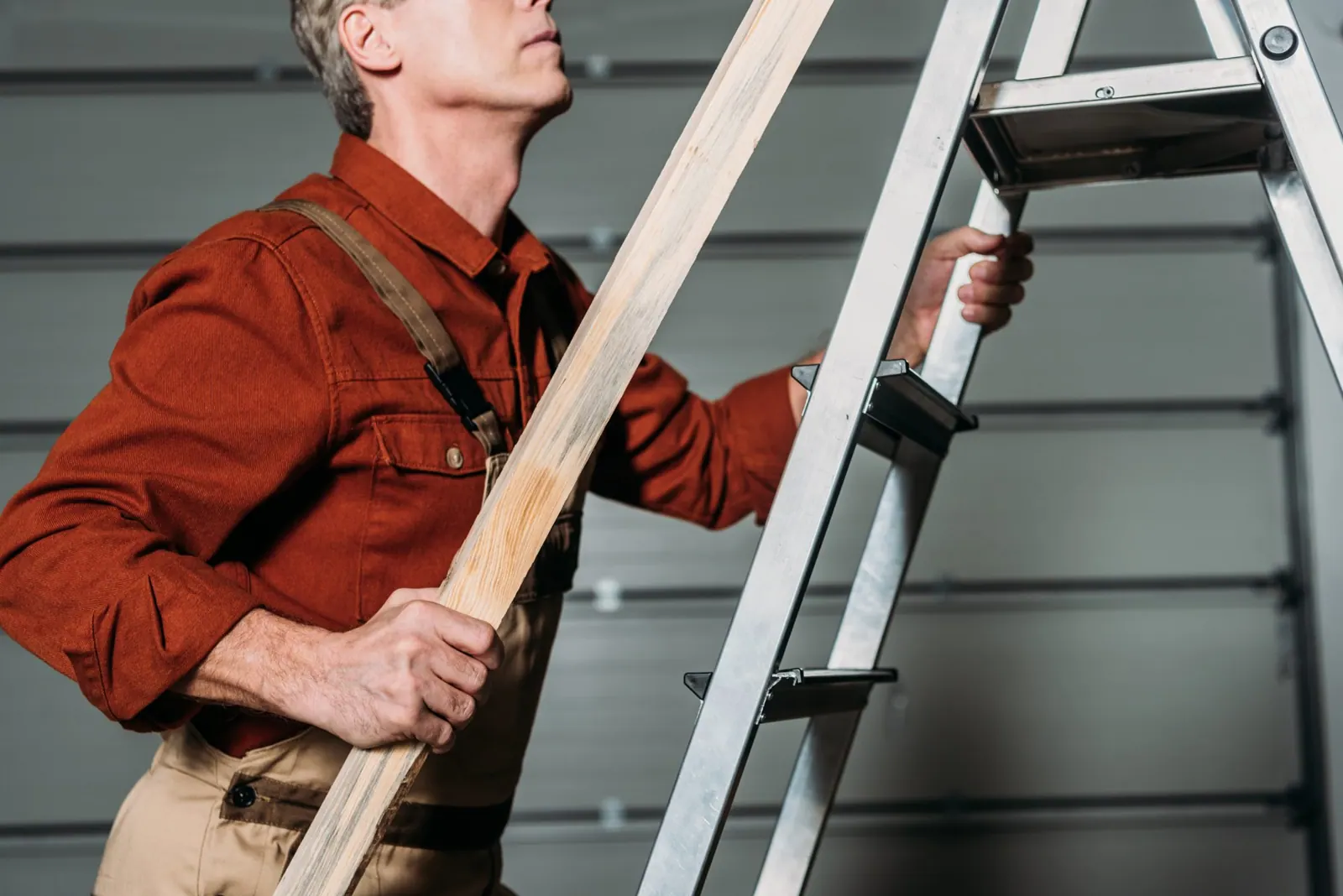
Technician on a ladder inspecting overhead garage door hardwareResidential Doors

Why garage door maintenance matters

Your garage door is a machine. It has springs under high tension, steel cables, bearings, rollers, hinges and a motorized opener, and it may run several thousand cycles a year. Like any machine, it performs best — and lasts longest — when someone looks after it. The trouble is that garage doors tend to work quietly in the background until the day they don’t, and by then a small problem has often become an expensive one.

Routine maintenance shifts the odds in your favor. Lubricated rollers and hinges reduce friction, which takes load off the springs and opener. A door that stays in balance is easier on every part. Loose fasteners caught early don’t elongate their holes or crack hinges. And a tested safety system means the door will reverse if a child, pet or car is in the way.

What a professional tune-up covers

A thorough garage door tune-up is more than a quick spray of lubricant. Here is what we work through:

  1. Springs — inspecting for rust, gaps, stretching or signs of fatigue, and checking that both springs on a two-spring system are working evenly.
  2. Cables and drums — looking for fraying, broken strands and uneven winding.
  3. Rollers — checking for wear, cracked wheels and failing bearings; worn rollers are a common source of noise.
  4. Hinges and fasteners — tightening lag screws and carriage bolts, and replacing cracked hinges.
  5. Tracks — checking alignment and mounting, removing debris and confirming nothing is bent.
  6. Balance — the single most revealing test; a door that won’t stay roughly in place at mid-height needs spring attention.
  7. Weatherstripping — inspecting the bottom seal and perimeter stops for cracks and gaps.
  8. Opener — checking the drive (chain, belt or screw), rail, mounting and force and limit settings.
  9. Safety features — testing photo-eye sensors, contact reversal and the emergency release.
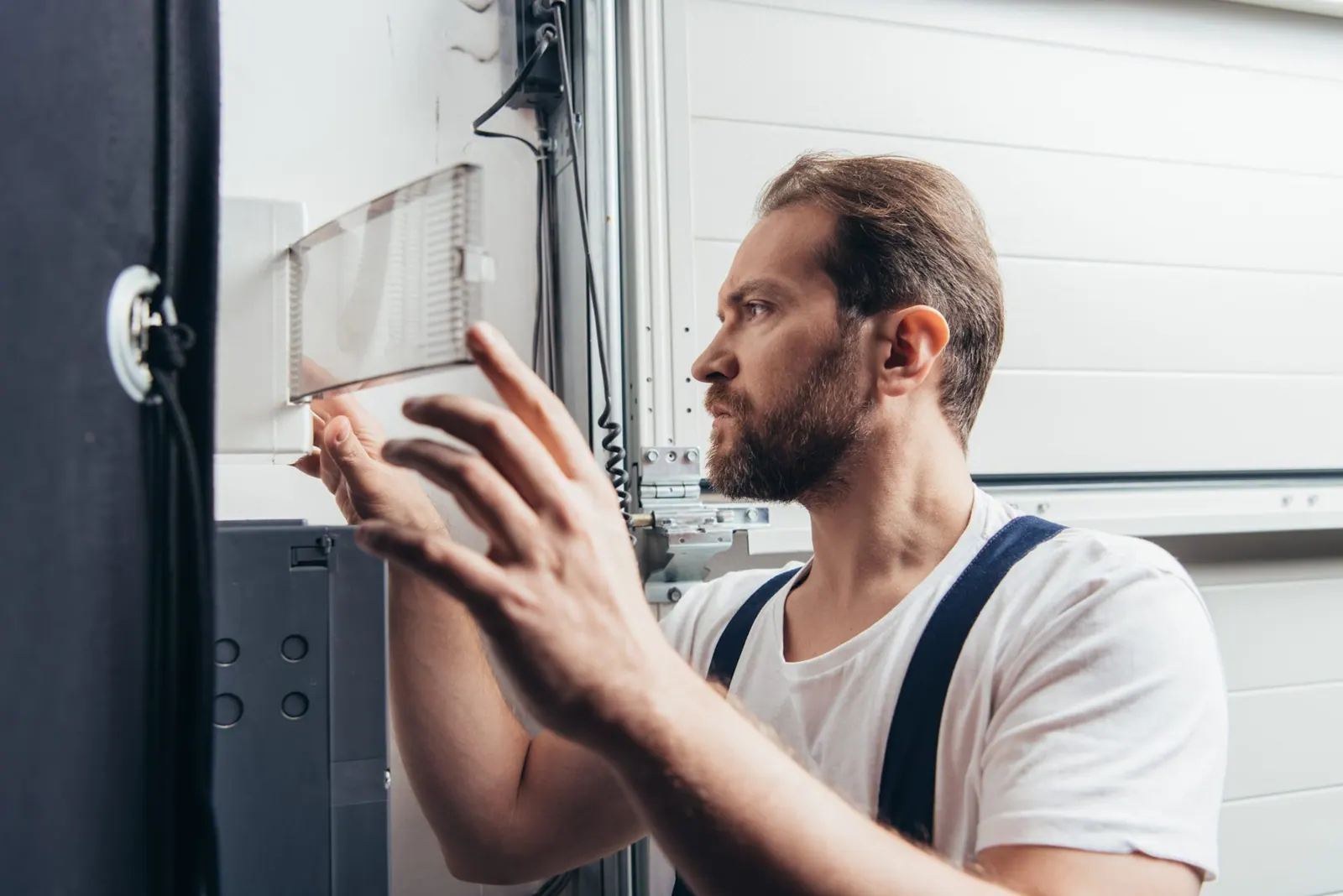
Technician adjusting the garage door opener mechanism Opener settings are checked and adjusted after the door itself is balanced — never the other way around.
i. What to watch for

Signs your door is overdue for a tune-up

Maintenance is most valuable before problems appear, but these signs suggest a tune-up shouldn’t wait.

01

It’s louder than it used to be

Squeaks, rattles and scraping usually come from dry rollers, loose fasteners or worn hinges — all easy to address early.

02

Movement is jerky or uneven

Hesitation, shuddering or speed changes during travel point to friction, track issues or a door going out of balance.

03

The opener sounds strained

An opener that labors may be compensating for weak springs or binding hardware, which shortens its life.

04

Visible rust on hardware

Rust on springs, brackets and track bottoms is common in salt-heavy winters and worth treating before it spreads.

05

Seals are cracked or flattened

Worn weatherstripping lets in cold air, water, leaves and pests and is a simple, affordable fix.

06

Nobody can remember the last service

If it’s been years since anyone looked closely at the springs, cables and safety system, a check-up is worthwhile.

Before & after

See the difference the right work makes

Drag the handle — or use your arrow keys — to compare.

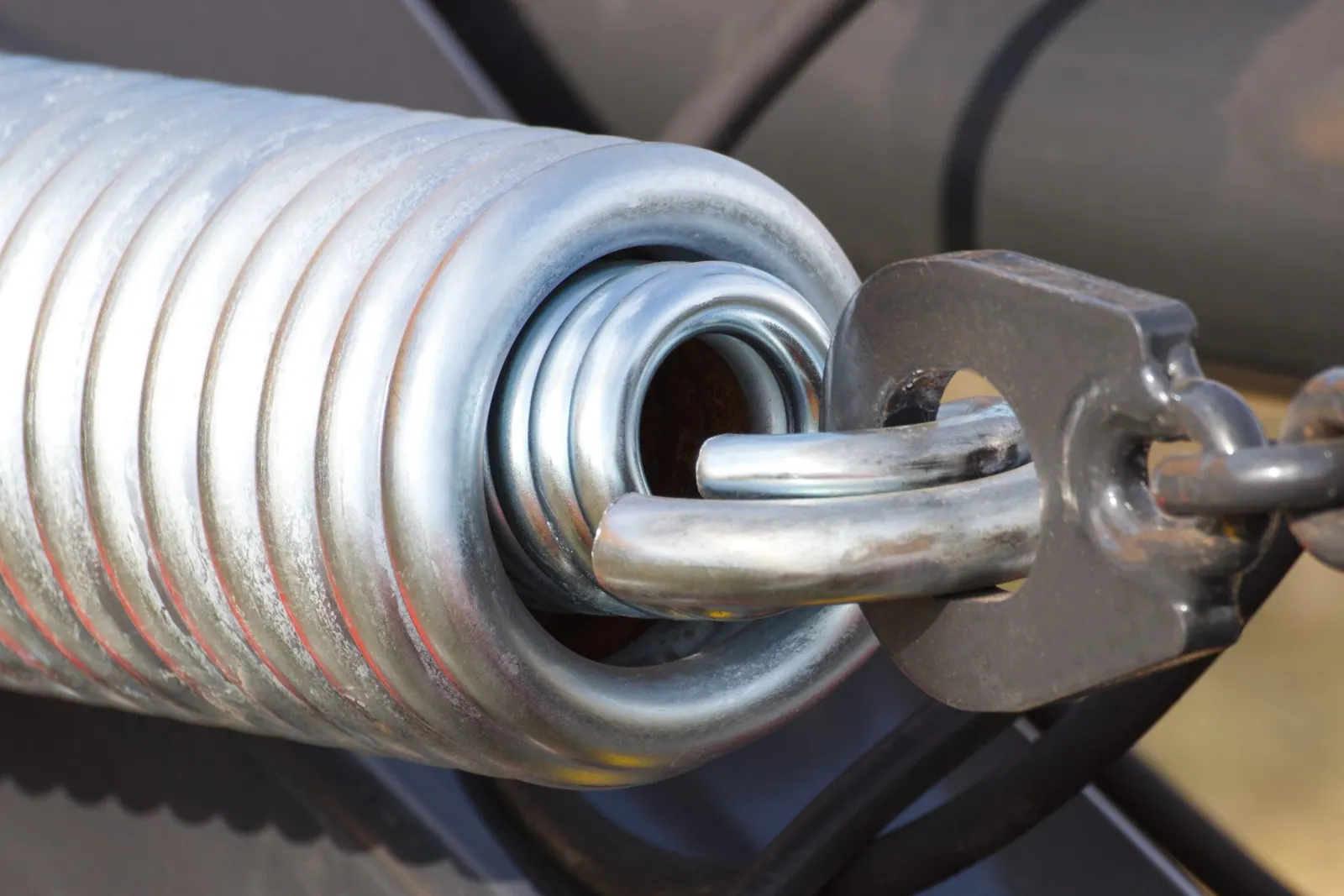
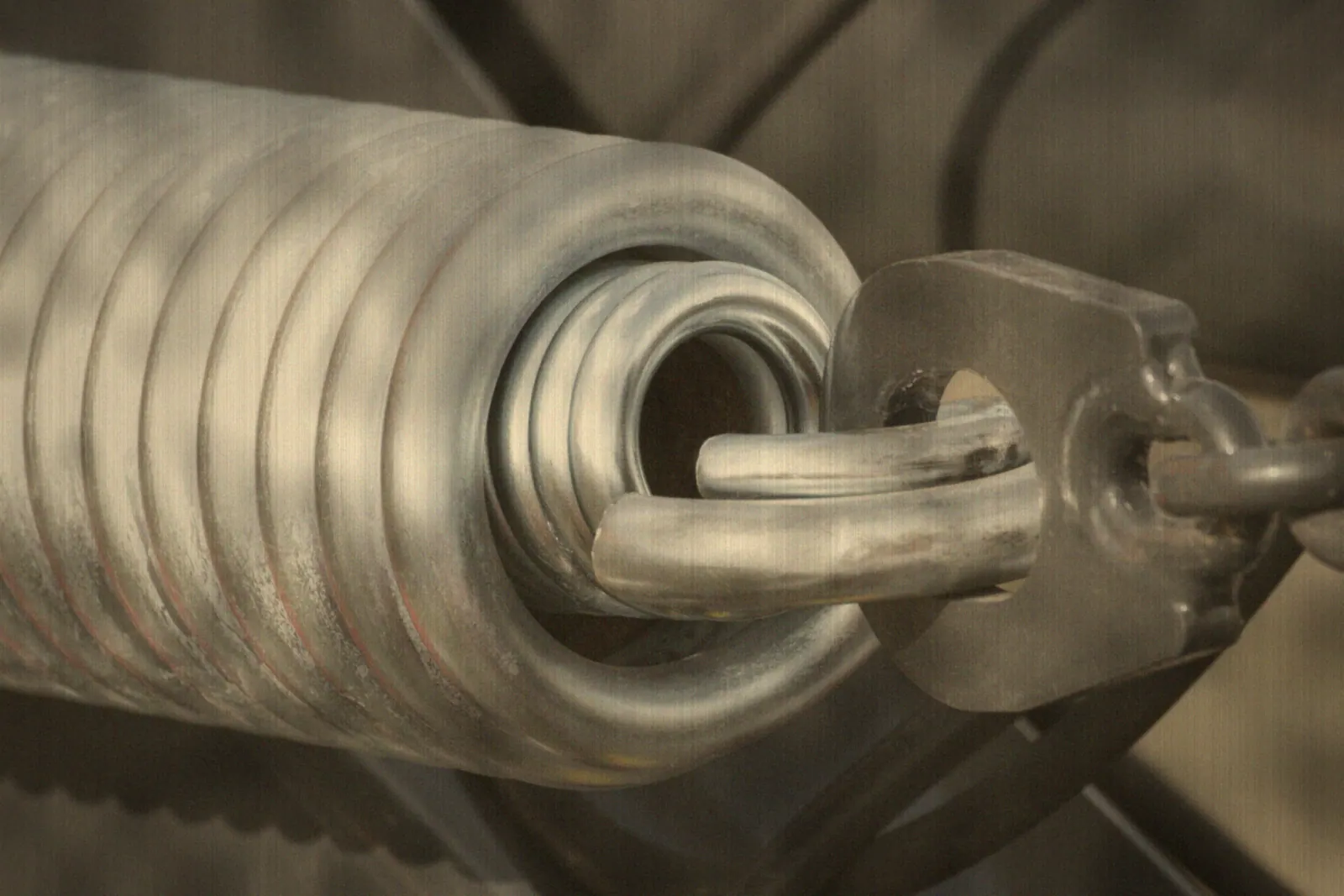
Grimy, dull extension spring and hook hardware (simulated neglected condition)
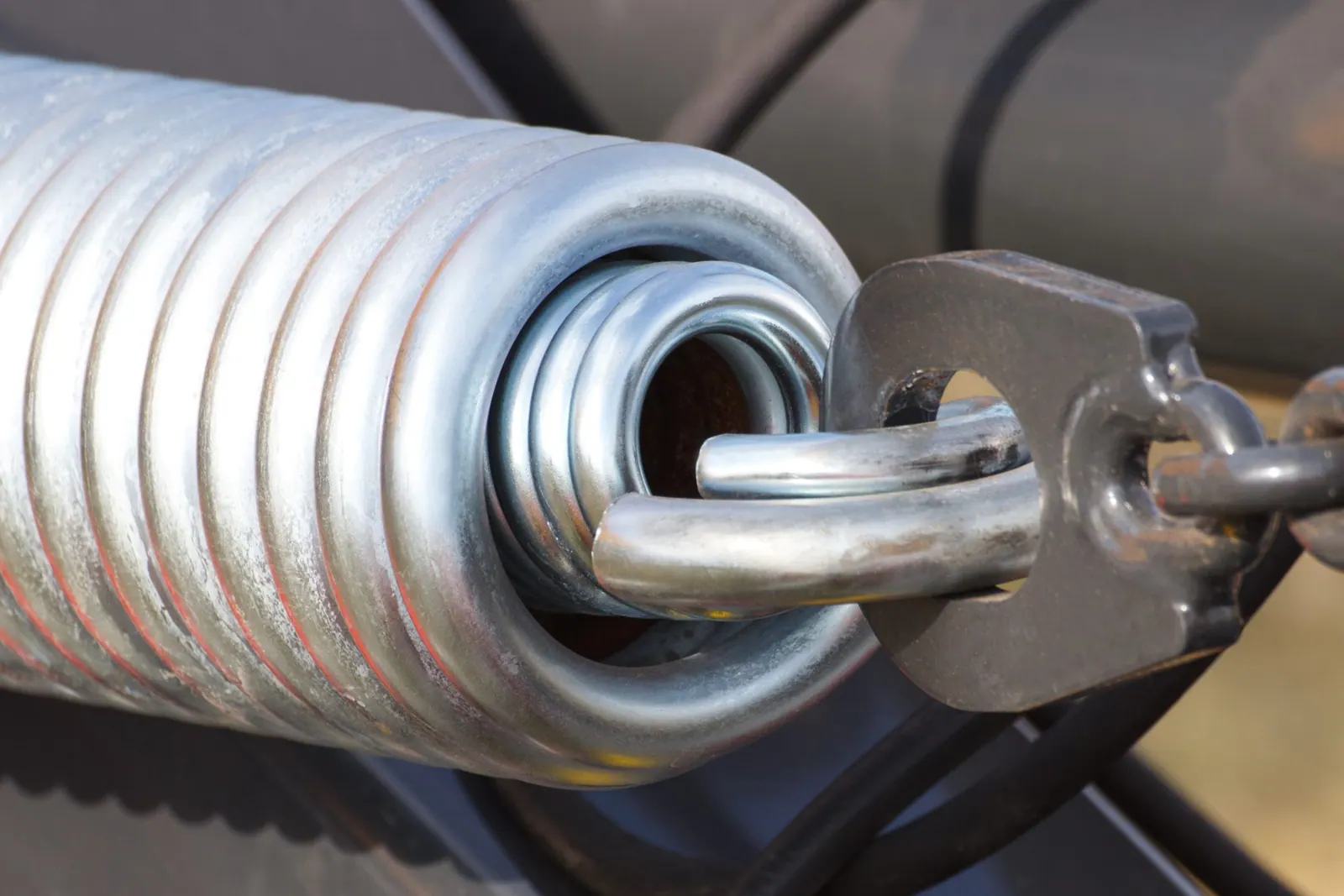
Clean, bright extension spring hooked securely to its hardware
BeforeAfter
IllustrativeDirty, dry hardware versus the same assembly cleaned, inspected and lubricated during a tune-up. Illustrative concept: the “before” view is a digitally simulated condition of the same stock photo, not a customer project.

The best time to schedule maintenance in Sussex

Fall is the ideal time for a garage door tune-up in southeastern Wisconsin. Cold weather is hard on garage doors: lubricants thicken, metal contracts, and springs that are already fatigued are more likely to break on frigid mornings. Bottom seals stiffen and can freeze to the floor, and openers have to work harder to move a door through stiff hardware. A pre-winter tune-up addresses all of these before the first hard freeze.

Spring is a good second checkpoint. After months of road salt, slush and freeze-thaw cycles, it is worth checking for corrosion on bottom brackets and track bottoms, and replacing any seals that have cracked.

Simple homeowner maintenance between visits

You don’t need tools or special training to keep your door in better shape between professional visits. A few minutes each season makes a difference:

  • Look and listen. Run the door and watch it move. Note any new noises, shaking or hesitation.
  • Clean the tracks. Wipe out dirt, leaves and debris. Don’t grease the inside of the tracks.
  • Lubricate moving parts. Apply a garage-door lubricant to hinges, roller bearings and spring coils a couple of times a year.
  • Check the weatherstripping. Look for cracks, tears and flattened sections along the bottom and sides.
  • Test the safety reversal monthly. Use the 2x4 test and the photo-eye test described in the FAQ below.
  • Keep the sensors clean. Dust and cobwebs on the photo-eye lenses cause false reversals.

Leave springs alone. Spring adjustment, cable replacement and bottom bracket work involve dangerous stored energy. These tasks belong to a trained technician with the right tools.

Maintenance for older doors and heavier doors

Older doors and heavy wood or custom doors deserve a little extra attention. Older doors often have original springs that are well into their cycle life, and their hinges and rollers may be the original nylon or steel parts. Heavy doors put more load on every component, which magnifies the effect of any imbalance. If your door falls into either category, ask about a more frequent maintenance schedule.

What happens if we find a problem

If a tune-up turns up something more serious — a spring near failure, a frayed cable, a cracked bracket — we’ll show you what we found and explain the options and costs before doing anything beyond the agreed maintenance. Some issues are safety-critical and best fixed right away; others can be planned for. Either way, the decision is yours, made with clear information.

A seasonal checklist for Sussex homeowners

Fall: schedule a professional tune-up, replace cracked bottom seals, lubricate hinges and rollers, put fresh batteries in remotes and the keypad, and clear leaves from the tracks and threshold.

Winter: keep snow and slush cleared from the base of the door, avoid running the opener if the door is frozen to the floor, and keep an ear out for new noises on very cold mornings.

Spring: rinse salt residue off the bottom section and hardware, look for rust on bottom brackets and track bottoms, and check perimeter seals for damage.

Summer: test the safety reversal, clean the photo-eye lenses, and check that the door still opens and closes smoothly in the heat.

Signs a tune-up turned up something important

Most tune-ups end with small adjustments and a quieter door. Occasionally, though, we find something that matters more: a spring with visible gaps or heavy rust, a cable with broken strands, a cracked bottom bracket, or safety sensors that no longer reverse the door. When that happens we’ll show you exactly what we found, explain the risk in plain terms and give you options, so the decision about what to do next is an informed one.

ii. The visit

What to expect, step by step

Every job is different, but the rhythm of a good service call shouldn’t be. Here’s how a garage door maintenance & tune-ups visit typically unfolds.

Start with a request

Visual inspection

We look over springs, cables, drums, rollers, hinges, tracks, brackets and seals for wear and damage.

Balance test

The opener is disconnected and the door is lifted by hand to check spring balance at several heights.

Tighten and adjust

Hinges, brackets and track fasteners are tightened, and tracks are checked for alignment.

Lubricate

Moving metal parts are lubricated with a garage-door-appropriate product; tracks are cleaned, not greased.

Test the safety system

Photo-eye sensors, auto-reverse, force settings and the manual release are all tested.

Report back

You get a plain-language summary of what we found and anything worth planning for.

iii. FAQ

Garage Door Maintenance & Tune-Ups questions

Straight answers to the things Sussex homeowners and business owners ask most about garage door maintenance & tune-ups.

For most homes, a professional tune-up once a year is a good rhythm, ideally in the fall before cold weather arrives. Doors that cycle many times a day, or heavy wood and custom doors, may benefit from more frequent checks.

Use a lubricant made for garage doors, such as a silicone or lithium-based spray, on hinges, roller bearings, springs and the opener rail where appropriate. Avoid heavy grease in the tracks, which collects dirt and can make rollers skid rather than roll.

Yes. Homeowners can keep tracks clean, lubricate hinges and rollers, check the weatherstripping and test the safety reversal monthly. Leave spring adjustment, cable work and bottom bracket work to a professional because of the stored tension involved.

Place a sturdy object, such as a piece of 2x4 lying flat, in the door’s path and close the door. It should reverse when it contacts the object. Also wave an object through the photo-eye beam while the door closes; it should stop and reverse. If either test fails, stop using the opener until it’s checked.

Regular maintenance reduces friction and strain throughout the system and catches failing parts before they damage others. It cannot stop springs from eventually reaching the end of their cycle life, but it helps everything else wear more slowly and evenly.

Free estimates

Ready to talk about garage door maintenance & tune-ups?

Tell us what the door is doing — or not doing — and we’ll follow up to talk through options and set up a visit. Estimates are free.