Tracks
Tracks fail in a few predictable ways. They get dented by car bumpers, ladders, bikes and storage bins. They loosen as mounting bolts work free or lag screws strip their holes in the framing. They shift out of alignment, either drifting too far from the door (letting rollers pull out) or pinching too close (causing binding). And in salt-heavy garages, the bottom of the vertical tracks can corrode.
Minor dents can sometimes be carefully straightened. Kinked, twisted or corroded tracks should be replaced, because a roller that catches at a damaged spot can stall the door or force it off track. Track spacing and plumb are checked with the door closed and open.
Hinges
Hinges are numbered by position on most doors, with different offsets that keep the sections aligned as they travel. A cracked hinge lets a section flex and sag; a stripped hinge screw lets the hinge pull away from the door skin. Hinges near the center of wide doors work especially hard. We replace cracked hinges with the correct type and number, and reinforce stripped mounting points where needed.
When the door comes off track
An off-track door is one of the more hazardous garage door situations. The door may be twisted, partially supported and still connected to springs under tension. Here’s what to do:
- Stop. Don’t run the opener again — it can pull the door further out of the tracks.
- Unplug the opener so nobody uses it by accident.
- Keep clear of the door, and keep children and pets away.
- Call for service. Don’t try to hammer or pry rollers back into the track.
Our repair starts by securing the door, then relieving spring tension so the sections can be safely realigned. Damaged tracks, rollers and hinges are replaced, cables are checked (they often slip during an off-track event — see cable repair), and the door is balanced and tested before we leave.
Preventing future problems
- Keep the floor area beside the tracks clear so bikes, bins and tools can’t bump them.
- Listen for new noises and watch for wobbling rollers.
- Lubricate hinges and roller bearings a few times a year.
- Check that track brackets are tight during seasonal maintenance.
- Make sure the photo-eye sensors and auto-reverse are working so the door stops if something is in the way.
A quieter door, step by step
If noise is your main complaint, the fix is usually a combination of small things rather than one big repair. Worn rollers are replaced with sealed-bearing nylon rollers. Cracked or loose hinges are replaced and tightened. Track brackets are snugged up so the tracks don’t vibrate. Moving parts are lubricated. The door is balanced so the opener isn’t straining. And, if the opener itself is a noisy chain drive, it may be worth considering a quieter belt drive. Together, these changes can transform how a door sounds — especially in homes with a bedroom over the garage.
Track configurations and headroom
Not every door uses the same track layout. Standard-radius tracks are the most common. Low-headroom tracks allow a door to fit where there’s little space between the top of the opening and the ceiling. High-lift and vertical-lift tracks raise the door higher before it turns horizontal, which is useful in tall garages or where a car lift is installed. When tracks are replaced, the new tracks must match the door’s original configuration — or a deliberate change must be made with springs, cables and drums adjusted accordingly.
What happens to the opener
When a door has been off track or binding, the opener has usually been straining against it. After the tracks and rollers are repaired, we check the opener’s travel limits and force settings, since they may have been adjusted to compensate for the problem and need to be reset now that the door moves freely again.
If you’re not sure whether your rollers are worn, watch them as the door moves. Rollers that wobble, have chipped or flattened wheels, or don’t spin when the door passes over them are due for replacement. Hinges with visible cracks near the knuckle or screws backing out of the door skin should be replaced at the same visit.

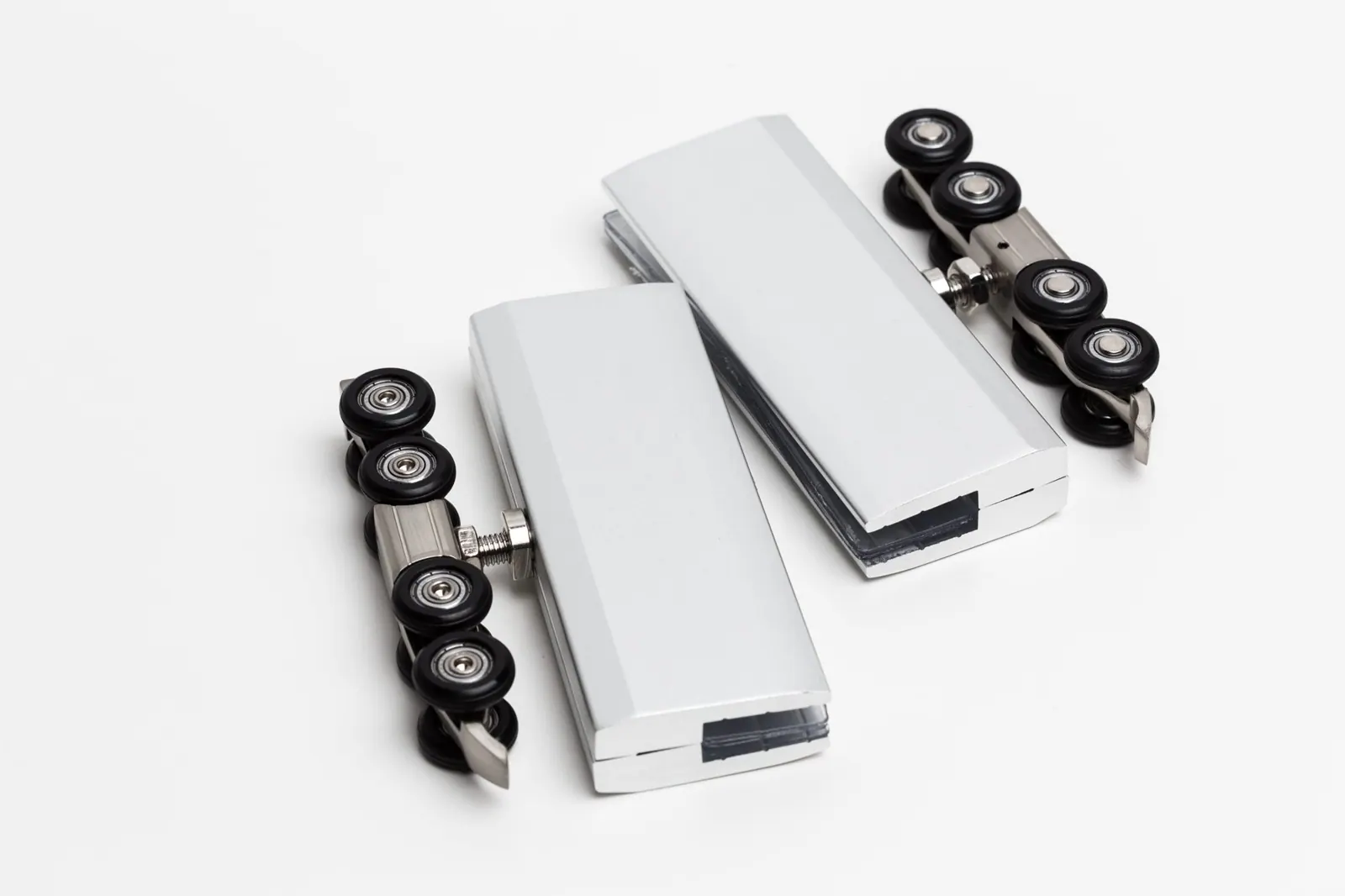 Fresh rollers on sealed bearings roll instead of skidding — the quickest route to a quieter door.