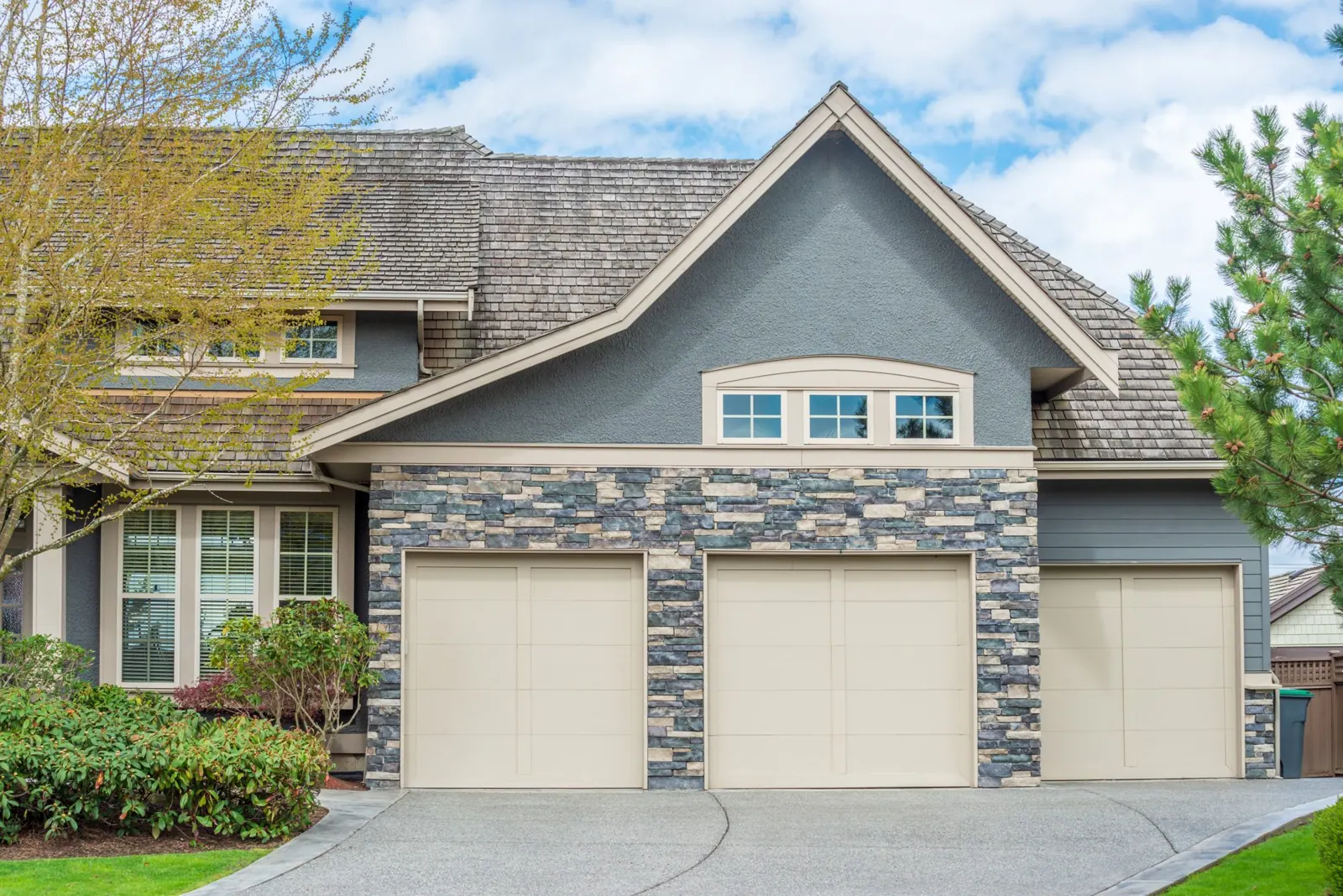
Three single garage doors set in a stone-and-stucco facade
Panel & Section Repair · Sussex, WI

Dented, cracked or rusted panels, repaired or replaced the right way

A backed-into door, a stray basketball or years of salty slush can leave visible damage. Sometimes a single section can be replaced. Sometimes it can’t. We help you sort out which.

How garage door sections are built

A sectional garage door is made of several horizontal sections — commonly four for a seven-foot door and more for taller doors — connected by hinges. Each section has an outer skin (steel, wood, composite or aluminum), internal reinforcement along the edges called stiles and rails, and, on insulated doors, a foam core and inner skin. The sections are designed to work together, flexing at the hinges as the door rolls around the curve in the track.

Damage to one section can affect the whole system. A buckled section may no longer fold properly at the radius. A cracked stile can let a hinge pull free. A bent bottom section can twist the bottom brackets that anchor the lift cables. That’s why panel damage deserves a proper look, even when it seems cosmetic.

Repair, replace a section, or replace the door?

When a repair is enough

Small cosmetic dents in a section that still operates smoothly sometimes don’t need anything at all. In other cases, a cracked stile or loose hinge mount can be reinforced with a strut or a repair plate. Reinforcing struts are also commonly added to wide doors to keep sections from bowing.

When to replace a single section

If one section is badly dented, creased, cracked or rusted, and the manufacturer still makes a matching section, replacing just that section is usually the best value. The bottom section is the most commonly replaced, since it takes the most abuse from water, salt and bumpers.

When the whole door should go

Single-section replacement stops making sense when several sections are damaged, the door is discontinued, or the cost of the section (plus labor) approaches a substantial portion of a new door. If the door is also uninsulated and drafty, a replacement often delivers far more value.

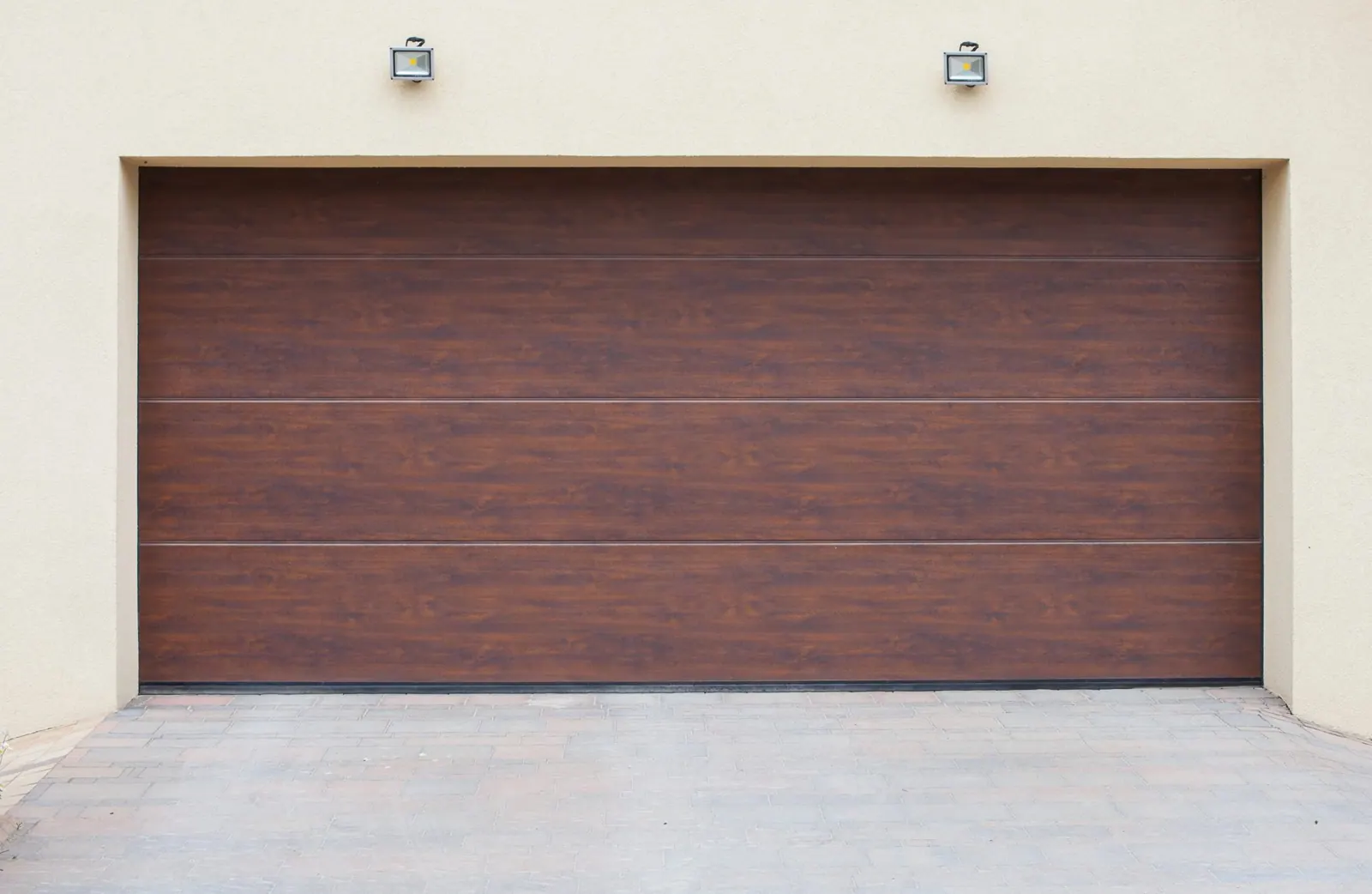
Walnut-tone garage door with long horizontal panels set in a beige wall Matching panel design, color and texture is the deciding factor for single-section replacement.

i. What to watch for

Types of panel damage we see most

The type and location of the damage determines whether a section can be repaired, replaced on its own, or whether the door as a whole should be replaced.

01

Impact dents

Vehicle bumpers, bikes and balls leave dents. Shallow cosmetic dents may be left alone; deep creases can weaken a section.

02

Buckled sections

A section that’s bowed or folded — often from the opener pushing against an obstruction — can bind in the tracks.

03

Cracks and split stiles

Cracks at hinge points or along stiles let sections flex and can allow hinges to tear loose.

04

Rust-through

Bottom sections take the brunt of water and salt; corrosion that has broken through the skin is hard to stop.

05

Rot and warping in wood

Wood sections exposed to moisture can swell, split or rot, especially at the bottom edge.

06

Delamination

On insulated doors, a skin separating from the foam core weakens the section and looks blistered or wavy.

Before & after

See the difference the right work makes

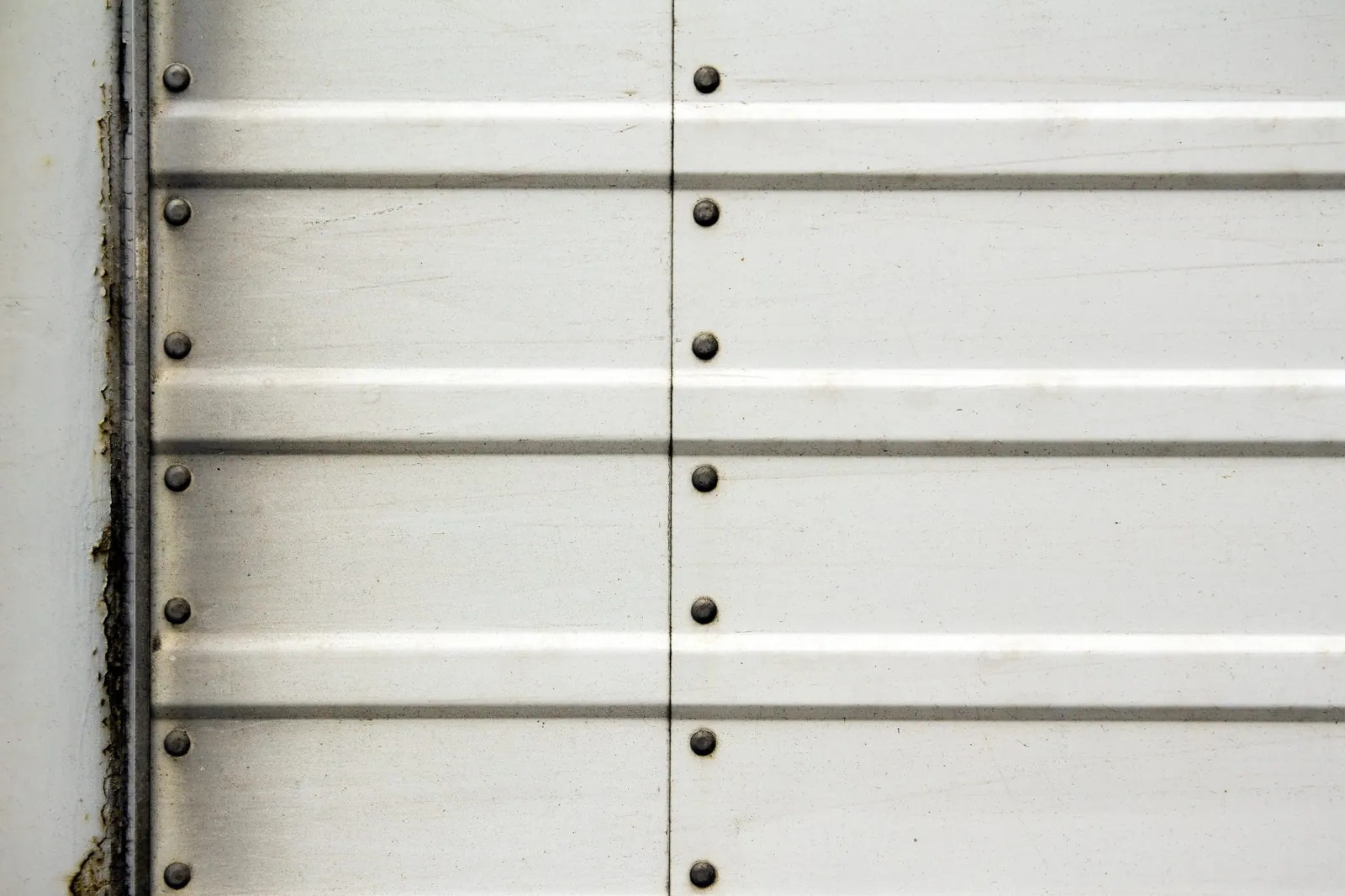
Worn, scuffed metal door panels with exposed rivets and dirty seamsBefore
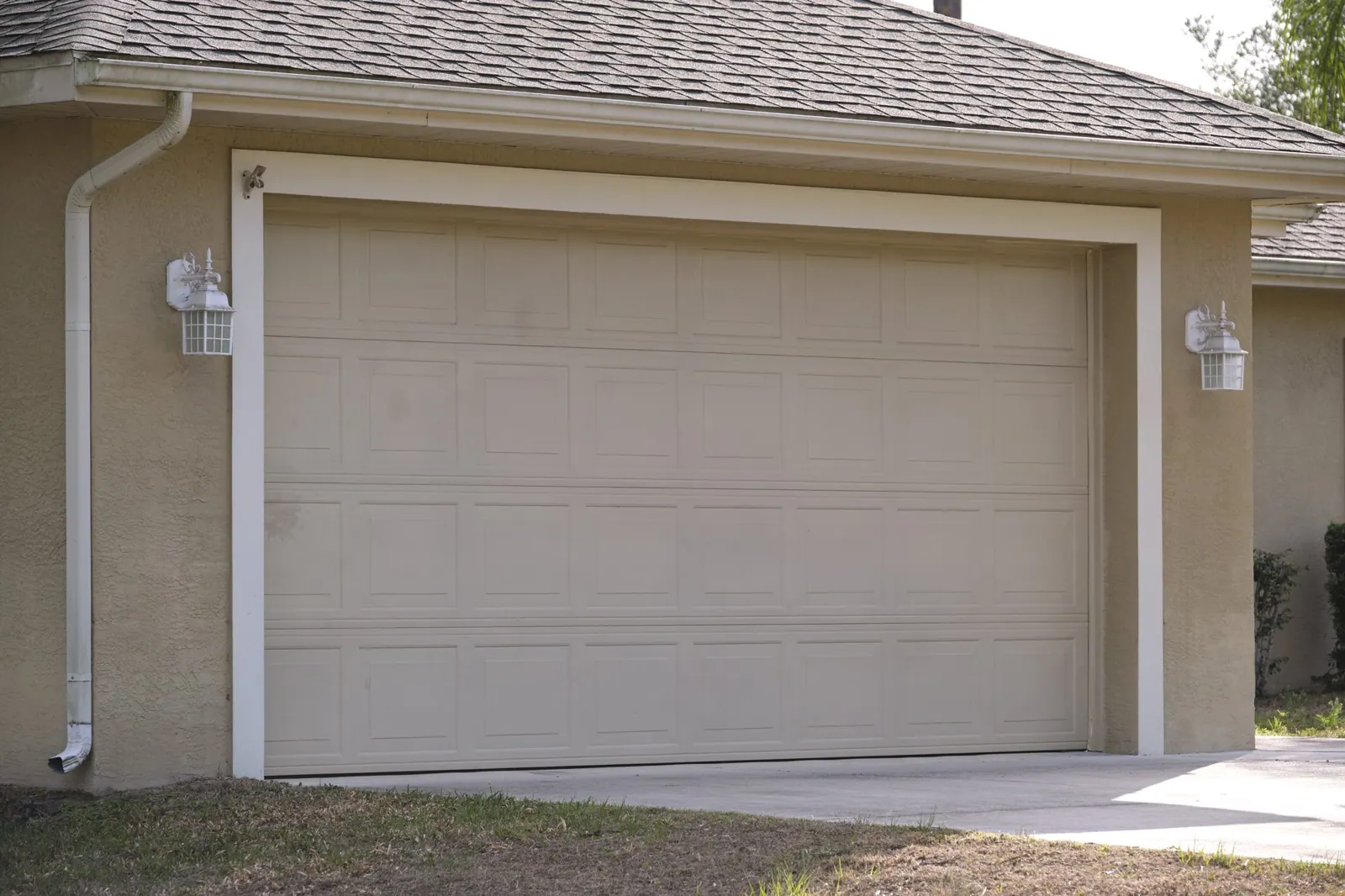
Clean tan raised-panel garage door with crisp, undamaged sectionsAfter
IllustrativeWeathered, damaged steel panels compared with clean, intact raised-panel sections. Illustrative example using stock photography — not a documented Sussex Garage Door Service project.

Identifying your door

To find a matching section, we need to know the manufacturer and model, the door’s width and section height, the panel design, the color and the texture. Many doors have a label on an inside edge or end stile with this information. If the label is missing, measurements and design details often narrow it down. We’ll let you know if a match is available before any work is scheduled.

The replacement process

Replacing a section is a structural job. Springs must be de-tensioned first, because removing a section changes the door’s weight and the cable connections at the bottom are under load. The damaged section is unhinged and removed, the new section is fitted with hinges and rollers, and the door is reassembled. Then springs are re-tensioned, the door is balanced and checked for smooth travel, and the bottom seal is inspected for a good fit.

Wisconsin-specific damage

In the Sussex area, the bottom section takes a beating every winter. Snowmelt pools at the threshold, road salt rides in on tires and wheel wells, and the bottom edge of the door sits in that mixture for months. Over time, paint fails and rust starts along the lower edge. Wood doors absorb moisture and can rot from the bottom up. Keeping the area around the door as dry as practical, rinsing off salt residue in spring and maintaining a good bottom seal all help.

Ice can also cause damage. A bottom seal frozen to the slab can be torn off — or the opener can strain hard enough to bow a section — when the door tries to open. If your door is frozen down, free it gently before running the opener.

Preventing panel damage

  • Add reinforcing struts to wide or lightweight doors that tend to flex.
  • Keep the opener force setting no higher than needed so it reverses rather than buckling a section against an obstruction.
  • Install a parking aid so vehicles stop short of the door.
  • Keep basketball hoops and play areas away from the door face where possible.
  • Touch up chips and scratches in steel doors before rust can start.

A note on wood and older doors

Wood sections can sometimes be repaired rather than replaced — small areas of rot may be cut out and patched, split stiles glued and reinforced, and the section refinished. Whether that’s worthwhile depends on how widespread the damage is and how much life the rest of the door has left. On older steel doors that are no longer manufactured, a sound section from a salvage door or a careful repair may be the only option short of replacement. We’ll explain what’s realistic for your door so you can decide with confidence.

Insurance and documentation

If your door was damaged by a vehicle or a storm, you may want photos and a written description of the damage for your records or for an insurance claim. Take pictures before anything is moved, if it’s safe to do so, and ask us to note the damage we find during the inspection.

Reinforcing struts for wide doors

Double-wide garage doors, especially lightweight single-layer steel doors, can bow in the middle over time or when an opener pushes hard against them. Horizontal reinforcing struts fastened across the back of the sections stiffen the door, protect it from opener stress and help it stay straight in the wind. They’re often added to the top section where the opener arm connects, and sometimes to other sections as well. If your door has started to sag or bow, struts may be part of the solution.

Painting and finishing replacement sections

Factory-finished replacement sections usually match well when they come from the same product line, but an older door that has faded in the sun may look slightly different beside a new section. Painting the entire door with a quality exterior paint suitable for the door material can unify the appearance. For steel doors, the surface must be cleaned and prepared properly so the paint bonds and doesn’t peel in the next freeze-thaw season.

ii. The visit

What to expect, step by step

Every job is different, but the rhythm of a good service call shouldn’t be. Here’s how a garage door panel repair & replacement visit typically unfolds.

Start with a request

Inspect the damage

We check the damaged section and the hardware around it, which often takes a hit too.

Identify the door

Manufacturer, model, size, color and design are noted to see whether a matching section is available.

Lay out options

Repair, single-section replacement or full replacement — with honest pros, cons and costs for each.

Release tension and remove

Spring tension is relieved and the damaged section is safely removed.

Install and rehang

The new section is installed with new hinges and rollers as needed, then the door is re-tensioned.

Balance and test

The door is balanced and tested for smooth travel and a proper seal.

iii. FAQ

Garage Door Panel Repair & Replacement questions

Straight answers to the things Sussex homeowners and business owners ask most about garage door panel repair & replacement.

Often, yes — if the manufacturer still makes a matching section in the same size, design and color. Older or discontinued doors may not have matching sections available, and a slightly different color or texture can stand out. We’ll check availability before you decide.

Cosmetic dents that don’t affect operation can sometimes be left or minimized. Dents that crease the steel, bend the section or affect the hinges or rollers should be addressed because they can cause binding and further damage.

When the manufacturer and model are identified and the section is still produced, a close match is usually possible. Sun exposure fades older doors over time, so a brand-new section can look slightly different. Painting the whole door is sometimes an option.

When two or more sections are damaged, when the door is old and discontinued, when rust or rot is widespread, or when the cost of a single section approaches a large share of a new door’s cost.

Not until it’s inspected. Impacts can bend tracks, crack hinges, damage cables and knock rollers out of alignment, even if the section itself looks only slightly dented.

Free estimates

Ready to talk about garage door panel repair & replacement?

Tell us what the door is doing — or not doing — and we’ll follow up to talk through options and set up a visit. Estimates are free.